One of the most common fitness questions people ask is: How often should you work out in a week? The answer isn’t one-size-fits-all. It depends on your goals, fitness level, age, recovery ability, and lifestyle.
Some people believe working out every day is necessary for results, while others think a few sessions per week are enough. The truth lies somewhere in between. Working out too little may slow progress, while working out too much can lead to fatigue, injury, and burnout.
In this detailed guide, you’ll learn how many days a week you should work out, based on science, fitness goals, and real-world practicality—so you can build a routine that delivers results and is sustainable long term.
Why Workout Frequency Matters
Workout frequency refers to how many days per week you exercise. It plays a major role in:
- Muscle growth and strength
- Fat loss and metabolism
- Cardiovascular health
- Recovery and injury prevention
- Long-term consistency
Finding the right balance between training and recovery is essential for progress.
General Exercise Guidelines (Baseline Recommendation)
Most health and fitness experts recommend:
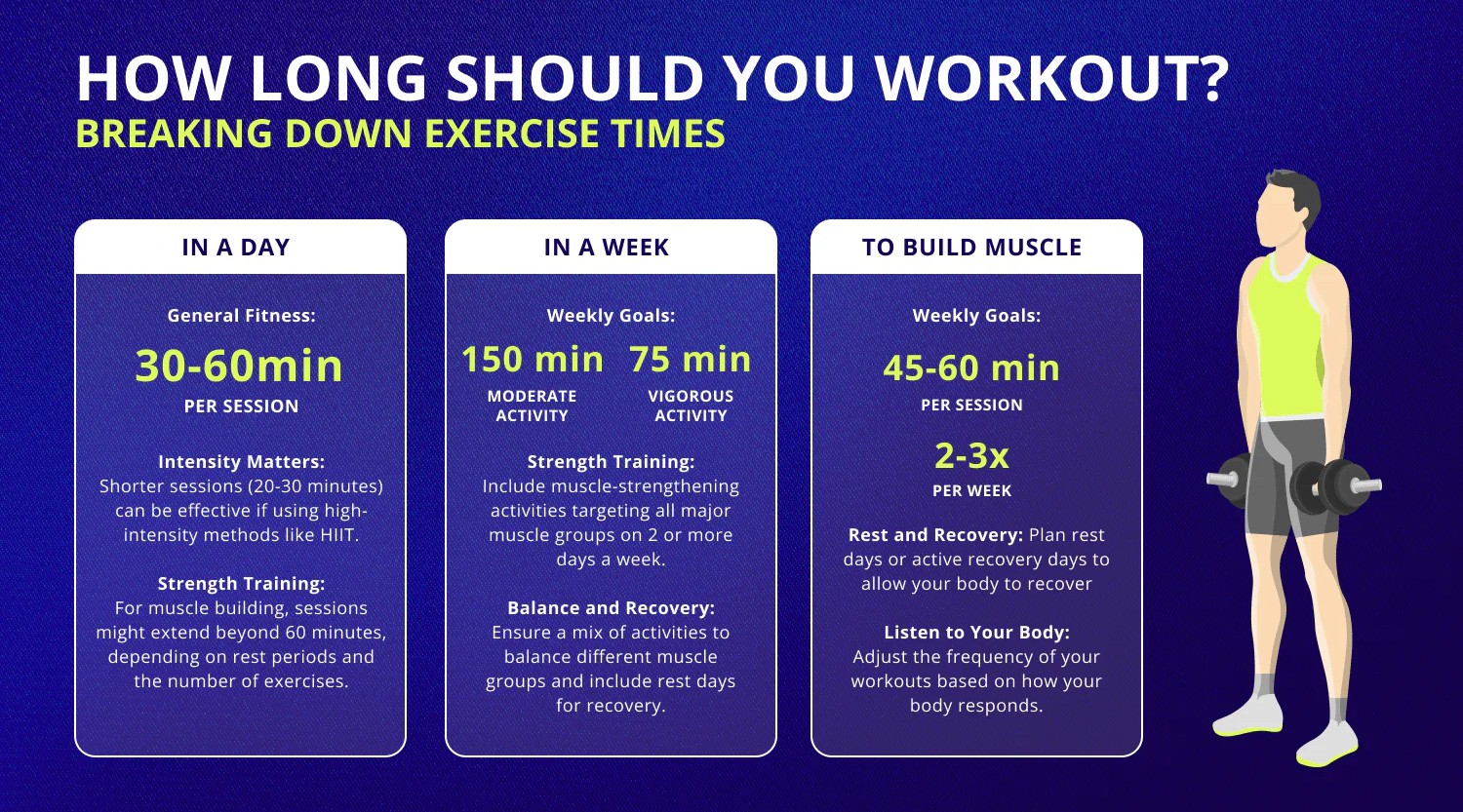
- 150–300 minutes of moderate exercise per week, or
- 75–150 minutes of intense exercise per week, plus
- At least 2 days of strength training
This provides a foundation, but optimal frequency varies by individual goals.
How Often Should You Work Out Based on Your Goal?
1. For General Health and Wellness
If your goal is to stay active, healthy, and energetic:
Recommended frequency:
👉 3–5 days per week
Why this works:
- Improves heart health
- Maintains muscle and joint function
- Reduces stress and improves mood
Example routine:
- 3 days: Full-body workouts or brisk walking
- 1–2 days: Light cardio, yoga, or stretching
This approach is ideal for beginners and busy individuals.
2. For Weight Loss and Fat Burning
If fat loss is your primary goal, consistency matters more than intensity.
Recommended frequency:
👉 4–6 days per week
Why this works:
- Increases total calorie burn
- Improves metabolic rate
- Supports fat loss while preserving muscle
Ideal combination:
- 3–4 days of strength training
- 1–2 days of cardio or HIIT
Rest days are still essential to prevent overtraining.
3. For Muscle Building (Hypertrophy)
Building muscle requires training stimulus + recovery.
Recommended frequency:
👉 4–6 days per week
Training split options:
- Upper/Lower split (4 days)
- Push/Pull/Legs (5–6 days)
- Full-body workouts (3–4 days)
Each muscle group should be trained 2 times per week for optimal growth, with at least 48 hours of recovery between sessions.
4. For Strength and Performance
Strength-focused training emphasizes quality over quantity.
Recommended frequency:
👉 3–5 days per week
Why fewer days work:
- Heavier loads stress the nervous system
- Recovery is critical for strength gains
Example:
- 3 days: Compound lifts (squats, presses, pulls)
- Optional 1–2 accessory or conditioning sessions
5. For Endurance and Cardio Fitness
Runners, cyclists, and endurance athletes often train more frequently.
Recommended frequency:
👉 4–6 days per week
Balance is key:
- Mix low-, moderate-, and high-intensity sessions
- Include at least one rest or active recovery day
Too much high-intensity cardio can increase injury risk.
How Often Should Beginners Work Out?
If you’re new to exercise, more is not better.
Best starting point:
👉 2–3 days per week
Benefits:
- Allows muscles and joints to adapt
- Reduces soreness and injury risk
- Builds long-term consistency
After 4–6 weeks, you can gradually increase to 3–4 days per week.
How Often Should Older Adults Work Out?
Age doesn’t reduce the need for exercise—it increases it.
Recommended frequency:
👉 3–5 days per week
Focus areas:
- Strength training (2–3 days)
- Balance and mobility
- Low-impact cardio
Recovery time may be longer, so listening to your body is crucial.
Is Working Out Every Day Bad?
Not necessarily—but it depends on intensity and variation.
When daily workouts are okay:
- Low-intensity activities (walking, yoga, mobility)
- Alternating muscle groups
- Including active recovery days
When daily workouts become harmful:
- High-intensity training without rest
- Persistent fatigue or soreness
- Declining performance
Rest days are not laziness—they’re part of progress.
Signs You’re Working Out Too Much
- Constant muscle soreness
- Poor sleep quality
- Decreased motivation
- Increased injury frequency
- Plateau or regression in performance
If you notice these signs, reduce frequency or intensity.
Signs You’re Not Working Out Enough
- Low energy levels
- Poor stamina
- Difficulty maintaining weight
- Muscle weakness
Increasing activity gradually can improve these symptoms.
Sample Weekly Workout Schedules
3-Day Schedule (Beginner)
- Day 1: Full-body workout
- Day 2: Rest or walking
- Day 3: Full-body workout
4-Day Schedule (Fat Loss / Muscle)
- Day 1: Upper body
- Day 2: Lower body
- Day 3: Rest or cardio
- Day 4: Full-body or HIIT
5–6 Day Schedule (Advanced)
- Strength training: 4–5 days
- Cardio or conditioning: 1–2 days
- 1 full rest day
Recovery Is Just as Important as Training
Your muscles don’t grow during workouts—they grow during recovery.
Optimize recovery by:
- Sleeping 7–9 hours
- Eating enough protein
- Staying hydrated
- Managing stress
Training without recovery slows progress.
Common Myths About Workout Frequency
Myth 1: More workouts mean faster results
👉 Truth: Recovery determines results.
Myth 2: You must work out every day
👉 Truth: Rest improves performance.
Myth 3: Longer workouts are better
👉 Truth: Quality beats quantity.
Final Answer: How Often Should You Work Out in a Week?
For most people, the sweet spot is:
👉 3–5 workouts per week
This range balances results, recovery, and sustainability. The best workout schedule is one you can maintain consistently without burnout or injury.
Final Thoughts
There is no perfect number of workout days that works for everyone. Your ideal frequency depends on your goals, experience level, and recovery capacity. Start where you are, progress gradually, and remember that consistency over time beats intensity in the short term.
Fitness is a lifelong journey—build a routine you can stick to.
About The Author