Introduction: The Age-Old Debate in the Fitness World
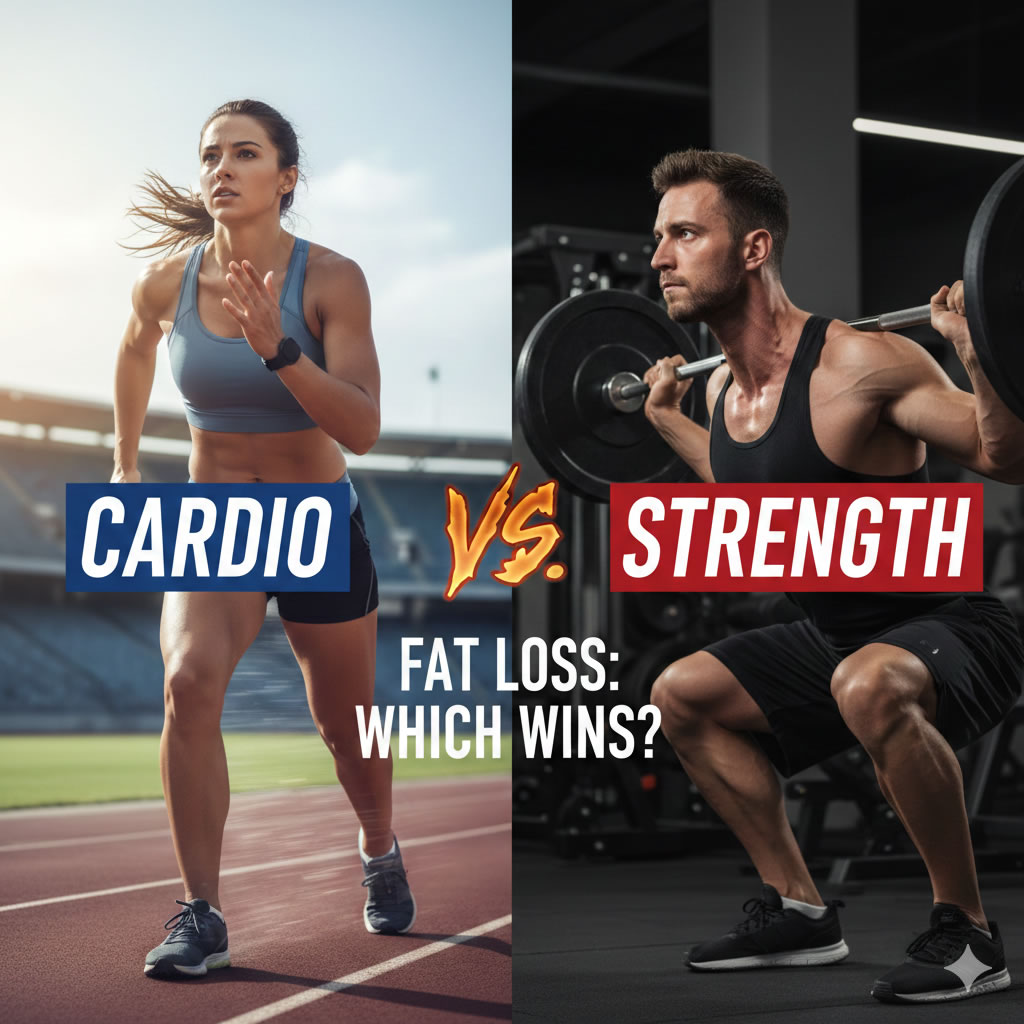
When the goal is fat loss, the conversation inevitably turns to two major pillars of exercise: cardiovascular training (cardio) and strength training (resistance training). For decades, fitness enthusiasts, personal trainers, and even medical professionals have debated which approach is superior for shedding unwanted body fat. Is it the sweat-inducing, long-duration cardio sessions that burn a high number of calories in the moment? Or is it the muscle-building, metabolism-boosting power of lifting weights that continues to burn fat long after your workout ends?
This question isn’t just academic; it has real implications for how millions of people structure their fitness routines, invest their time, and ultimately achieve (or fail to achieve) their weight loss goals. The truth, as often is the case, is more nuanced than a simple “either/or” answer. Both cardio and strength training play vital, yet distinct, roles in the fat loss equation. Understanding these roles, their benefits, and how they interact can be the key to unlocking sustainable and effective results.
In this comprehensive guide, we’ll dive deep into the science behind both cardio and strength training, examining their unique mechanisms for fat loss. We’ll break down calorie expenditure, metabolic effects, hormonal responses, and long-term sustainability. By the end, you’ll have a clear understanding of which approach—or more likely, which combination—is best suited for your fat loss journey, enabling you to optimize your workouts for maximum impact and lasting success. Get ready to settle the score in the ultimate fitness showdown!
Understanding Fat Loss: More Than Just Calorie Counting
Before we pit cardio against strength training, it’s crucial to establish a foundational understanding of what fat loss truly entails. Many people mistakenly equate weight loss with fat loss. While often intertwined, they are not the same. Weight loss refers to a reduction in overall body weight, which can include fat, muscle, and water. Fat loss, specifically, targets the reduction of adipose tissue while ideally preserving or even building lean muscle mass.
The fundamental principle governing fat loss is creating a caloric deficit. This means consistently consuming fewer calories than your body expends. Your body then taps into its stored fat reserves for energy. However, merely creating a deficit isn’t enough for optimal body composition. The source of the calories burned, and the type of weight lost, are equally important.
Here’s why:
- Metabolic Rate: Your Basal Metabolic Rate (BMR) – the number of calories your body burns at rest – is heavily influenced by your muscle mass. More muscle means a higher BMR, making it easier to maintain a caloric deficit and burn fat around the clock.
- Hormonal Balance: Exercise, particularly intense exercise, impacts hormones like insulin, cortisol, growth hormone, and testosterone, all of which play a role in fat storage and mobilization.
- Energy Substrates: Different types of exercise utilize different fuel sources (carbohydrates, fats, and to a lesser extent, protein) during and after activity. Understanding this can help optimize your training.
- Body Composition: The ultimate goal for many is not just to see a lower number on the scale, but to improve body composition – reducing fat percentage while increasing or maintaining muscle mass. This leads to a leaner, more toned physique and improved health markers.
Therefore, while a caloric deficit is the non-negotiable starting point, the type of exercise you choose directly influences how your body achieves that deficit, what type of weight it loses, and how sustainable your results will be. This deeper understanding will be critical as we evaluate the unique contributions of cardio and strength training.
The Case for Cardio: Burning Calories in the Moment
Cardiovascular training, often simply called “cardio,” encompasses any activity that elevates your heart rate and gets your blood pumping, improving the efficiency of your heart, lungs, and circulatory system. Think running, cycling, swimming, brisk walking, elliptical training, or aerobic classes.
How Cardio Contributes to Fat Loss:
- Direct Calorie Expenditure: This is cardio’s most immediate and often celebrated benefit. During a cardio session, your body burns a significant number of calories. The intensity and duration of the exercise directly correlate with the total calories expended. For example, a 30-minute high-intensity interval training (HIIT) session can burn hundreds of calories, as can a longer, moderate-intensity run. This direct calorie burn contributes significantly to creating the necessary caloric deficit for fat loss.
- Example: A 150-pound person might burn around 300-450 calories in 45 minutes of moderate-intensity jogging.
- Improved Cardiovascular Health: While not directly a fat loss mechanism, a healthier cardiovascular system allows you to train longer and harder, indirectly supporting greater calorie expenditure over time. It also reduces the risk of numerous health conditions.
- Stress Reduction & Mood Enhancement: Cardio releases endorphins, which can improve mood and reduce stress. Lower stress levels can positively impact fat loss by mitigating cortisol levels, a hormone linked to increased abdominal fat storage.
- Enhanced Aerobic Capacity: Regular cardio improves your body’s ability to use oxygen efficiently, allowing you to sustain physical activity for longer periods without fatigue. This is crucial for increasing overall activity levels and consistency.
- EPOC (Excess Post-exercise Oxygen Consumption) – to a degree: While strength training is more renowned for EPOC, intense cardio, particularly HIIT, can also create a modest “afterburn effect.” This means your body continues to burn calories at an elevated rate for a period after the workout as it recovers and returns to its resting state.
Types of Cardio for Fat Loss:
- LISS (Low-Intensity Steady State): Activities like brisk walking, light jogging, or cycling at a consistent, moderate pace for longer durations (30-60+ minutes). It’s great for beginners, recovery, and those who prefer a less strenuous workout.
- MISS (Moderate-Intensity Steady State): A step up from LISS, where the intensity is sustained at a challenging but manageable level, often for 20-45 minutes.
- HIIT (High-Intensity Interval Training): Alternating short bursts of maximum effort with brief recovery periods. This type of cardio is highly effective for calorie burning, EPOC, and improving anaerobic capacity. It’s time-efficient but very demanding.
Cardio clearly offers a powerful tool for immediate calorie expenditure and overall health. Its ability to create a significant caloric deficit in a single session makes it a go-to for many focusing on fat loss. However, its impact on metabolism and body composition in the long term, especially compared to strength training, presents a different story.
The Case for Strength Training: Building a Fat-Burning Machine
Strength training, also known as resistance training, involves exercising your muscles against external resistance to build strength, size, and endurance. This can include lifting free weights (dumbbells, barbells), using resistance machines, bodyweight exercises, or resistance bands.
How Strength Training Contributes to Fat Loss:
- Muscle Preservation and Growth: This is strength training’s biggest superpower for fat loss. When you’re in a caloric deficit, your body can lose both fat and muscle. Strength training signals to your body that your muscles are essential and need to be preserved, even stimulated to grow.
- Why it matters: Muscle is metabolically active tissue. This means it burns calories even at rest. The more muscle mass you have, the higher your Basal Metabolic Rate (BMR). By preserving or increasing muscle mass during fat loss, you essentially turn your body into a more efficient, round-the-clock fat-burning machine.
- Elevated EPOC (Excess Post-exercise Oxygen Consumption): Strength training, especially compound movements and higher intensity sessions, elicits a much stronger and longer-lasting “afterburn effect” than most forms of cardio. After a challenging lifting session, your body continues to expend a significant number of calories for hours, and sometimes even a day or two, as it repairs muscle tissue and restores physiological balance. This contributes significantly to your overall daily caloric expenditure, even outside of the workout itself.
- Mechanism: EPOC is driven by processes like restoring ATP/CP stores, clearing lactate, re-oxygenating blood, and particularly, repairing muscle tissue micro-damage.
- Improved Insulin Sensitivity: Strength training has been shown to improve insulin sensitivity, meaning your body can more efficiently use glucose for energy rather than storing it as fat. This is a crucial benefit for metabolic health and long-term fat management.
- Hormonal Optimisation: Regular strength training can positively influence hormones related to fat metabolism, such as growth hormone and testosterone (in both men and women), which play roles in muscle building and fat mobilization. It can also help manage cortisol levels, particularly when paired with adequate recovery.
- Body Recomposition: Strength training is unparalleled for body recomposition – the process of decreasing body fat while increasing or maintaining muscle mass. This results in a leaner, more toned, and aesthetically pleasing physique, even if the number on the scale doesn’t change dramatically. You might weigh the same but look significantly different and healthier.
- Bone Density and Functional Strength: While not directly fat loss mechanisms, these are crucial overall health benefits. Stronger bones reduce osteoporosis risk, and increased functional strength improves quality of life and makes everyday activities easier, fostering a more active lifestyle.
Types of Strength Training for Fat Loss:
- Full-Body Workouts: Training all major muscle groups in a single session 2-3 times per week is highly effective for stimulating muscle growth and maximizing EPOC.
- Compound Movements: Exercises that involve multiple joints and muscle groups (e.g., squats, deadlifts, bench press, overhead press, rows). These are highly efficient for calorie burning and muscle recruitment.
- Progressive Overload: Gradually increasing the weight, reps, sets, or decreasing rest times over time is crucial to continually challenge muscles and stimulate growth.
Strength training is not just about getting “big”; it’s about making your body more metabolically efficient and resilient. Its long-term impact on your resting metabolism makes it a cornerstone of sustainable fat loss and body transformation.
Direct Calorie Burn vs. Metabolic Boost: The Core Difference
This is where the distinction between cardio and strength training for fat loss becomes most apparent and critical.
Cardio’s Primary Mechanism: High Immediate Calorie Burn
- Focus: During a cardio session, the primary goal is to elevate your heart rate and sustain it, leading to a direct and often significant number of calories burned during that specific workout session.
- Short-Term Impact: If you only look at the calories burned while exercising, cardio often appears to be the winner. A 60-minute run will typically burn more calories than a 60-minute weightlifting session. This makes cardio an excellent tool for rapidly creating a caloric deficit.
- Fuel Source: During moderate-intensity cardio, your body primarily uses a mix of carbohydrates and fats for fuel. At lower intensities, a higher percentage of calories come from fat, but the total calories burned are lower. At higher intensities, a higher percentage comes from carbs, but the total fat calories burned can still be higher due to the sheer volume.
Strength Training’s Primary Mechanism: Long-Term Metabolic Boost & Muscle Preservation
- Focus: While strength training does burn calories during the workout, its real power lies in its ability to fundamentally alter your body’s composition and metabolic machinery.
- Long-Term Impact: Strength training builds and preserves muscle mass. As discussed, muscle is metabolically active tissue, burning more calories at rest than fat tissue. This means that a person with more muscle mass will burn more calories 24 hours a day, 7 days a week, even when they are sleeping or sitting on the couch, compared to someone with less muscle. This long-term metabolic boost is a continuous, passive fat-burning engine.
- EPOC (Afterburn Effect): Strength training elicits a more pronounced and prolonged EPOC than most forms of cardio. Your body works harder to recover, repair muscle tissue, and restore energy systems for many hours post-workout, meaning you continue to burn additional calories long after you’ve left the gym.
- Fuel Source: During a strength training session, the primary fuel source is stored glycogen (carbohydrates). While fat isn’t the primary fuel during the workout, the metabolic adaptations and EPOC significantly increase overall fat utilization post-workout and at rest.
The Analogy:
- Cardio is like a direct payment: You put in the work (run), and you get an immediate return (calories burned). It’s effective for immediate deficit creation.
- Strength Training is like an investment: You invest in building muscle (assets), which then pays dividends (higher metabolism) continually, day and night.
While cardio is excellent for increasing the “outflow” side of the calorie equation in the short term, strength training effectively increases your body’s baseline “outflow” rate, making fat loss easier to achieve and sustain over the long haul. This fundamental difference underscores why a holistic approach is often superior.
The Synergy: Why Both Are Better Together
Having examined the unique strengths of both cardio and strength training, it becomes evident that framing this as a strict “either/or” choice is an oversimplification. For optimal fat loss, improved body composition, and overall health, a synergistic approach that incorporates both forms of exercise almost always yields superior results.
Here’s why combining cardio and strength training creates a powerful fat-loss engine:
- Maximize Caloric Deficit:
- Cardio: Provides a high, immediate calorie burn, directly contributing to the daily caloric deficit needed for fat loss.
- Strength Training: Elevates your resting metabolism by building and preserving muscle, leading to a higher continuous calorie burn throughout the day, even at rest.
- Together: You get the best of both worlds – significant calorie expenditure during workouts (cardio) and an elevated metabolic rate around the clock (strength training), accelerating your fat loss journey.
- Preserve and Build Muscle While Losing Fat:
- Pure caloric restriction without strength training often leads to significant muscle loss alongside fat loss.
- Adding strength training signals to your body to hold onto and even build muscle, ensuring that the weight you lose is predominantly fat. This leads to a more toned, defined physique.
- Enhanced Body Recomposition:
- Cardio alone can make you “skinny fat” if you lose muscle along with fat.
- Strength training actively reshapes your body, increasing muscle tone and reducing fat percentage.
- When combined, you not only reduce overall fat but also sculpt a fitter, stronger body, leading to a much more satisfying aesthetic outcome.
- Improved Cardiovascular Health AND Strength:
- Cardio strengthens your heart and lungs.
- Strength training strengthens your muscles, bones, and connective tissues.
- Together, you achieve comprehensive physical fitness, improving endurance, power, and resilience in daily life.
- Better Hormonal Regulation:
- Both types of exercise can positively influence hormones. Strength training aids in growth hormone and testosterone production, while cardio can help manage stress hormones like cortisol when not overdone.
- A balanced approach helps create an environment conducive to fat burning and muscle preservation.
- Increased Adherence and Enjoyment:
- Variety can prevent boredom and burnout, making it easier to stick to a routine long-term.
- Some days you might feel like lifting heavy; other days, a long run might be more appealing. Having both options allows for flexibility and sustained motivation.
- You can tailor the balance based on your energy levels, preferences, and specific goals.
The “Interference Effect” Debunked (Mostly): For a long time, there was concern about an “interference effect,” suggesting that doing cardio and strength training together might blunt muscle growth. While acute, very high volumes of both might have a minor impact on strength gains in elite athletes, for the vast majority of people focused on fat loss and general fitness, the benefits of combining them far outweigh any minimal theoretical drawbacks. The key is smart programming and recovery.
In essence, cardio lays the groundwork for creating the immediate deficit, while strength training builds the engine for sustained fat burning and body transformation. Together, they form an unbeatable team for anyone serious about effective and lasting fat loss.
How to Structure Your Workouts for Optimal Fat Loss
Now that we understand the power of combining cardio and strength training, the next logical question is: how do you actually put them together in a practical, effective weekly schedule? There’s no one-size-fits-all answer, as it depends on your current fitness level, time availability, and personal preferences. However, here are several proven strategies and considerations:
1. Prioritize Strength Training (3-4 times per week)
For fat loss, especially when aiming for body recomposition, strength training should be your foundational activity. It’s the primary driver for muscle preservation and metabolic boost.
- Frequency: Aim for 3-4 full-body strength training sessions per week.
- Split: You can do full-body workouts, or use a split like upper/lower, push/pull/legs, or even body part splits if you have more time and experience. For general fat loss, 3-4 full-body or upper/lower splits are often most efficient.
- Focus: Compound movements (squats, deadlifts, presses, rows) should form the core of your routine, as they recruit the most muscle and burn the most calories.
- Progressive Overload: Always strive to lift a little heavier, do more reps, or improve your form over time. This is key for muscle growth.
2. Incorporate Cardio Strategically (2-4 times per week)
The type and intensity of cardio will depend on your preferences and how much recovery you need.
- HIIT (High-Intensity Interval Training):
- When: 1-2 times per week. Can be done on separate days from strength training, or immediately after a strength session if you have time and energy.
- Why: Maximize calorie burn in a shorter time, strong EPOC.
- Duration: 15-25 minutes including warm-up/cool-down.
- LISS/MISS (Low/Moderate-Intensity Steady State):
- When: 2-3 times per week. Great for active recovery days or on separate days from strength training.
- Why: Less taxing on the nervous system, aids recovery, burns calories without excessive fatigue, improves cardiovascular health.
- Duration: 30-60 minutes.
3. Common Scheduling Approaches:
- Option A: Separate Days:
- Monday: Strength Training (Full Body)
- Tuesday: HIIT Cardio
- Wednesday: Strength Training (Full Body)
- Thursday: LISS Cardio (e.g., brisk walk)
- Friday: Strength Training (Full Body)
- Saturday: LISS or Rest
- Sunday: Rest
- Pros: Maximizes recovery between modalities, prevents interference.
- Cons: Requires more dedicated days at the gym/for exercise.
- Option B: Hybrid Sessions (Cardio after Strength):
- Monday: Strength Training + 15-20 min LISS/MISS
- Tuesday: Rest/Active Recovery
- Wednesday: Strength Training + 15-20 min LISS/MISS
- Thursday: HIIT Cardio
- Friday: Strength Training + 15-20 min LISS/MISS
- Saturday: LISS or Rest
- Sunday: Rest
- Pros: Time-efficient, can still get good results.
- Cons: Can be fatiguing if cardio is too intense post-strength. Prioritize strength first if doing both in the same session.
- Option C: Morning Cardio, Evening Strength (or vice-versa):
- If you have the time and energy, doing them several hours apart can be effective to avoid interference.
4. Important Considerations:
- Listen to Your Body: Recovery is paramount. Overtraining can lead to burnout, injury, and increased cortisol, hindering fat loss. Ensure adequate sleep (7-9 hours).
- Nutrition: Remember, exercise creates the deficit, but nutrition dictates its composition. A consistent caloric deficit with adequate protein intake is crucial for preserving muscle.
- Warm-up & Cool-down: Always include 5-10 minutes of light cardio and dynamic stretches before workouts, and static stretches after.
- Start Gradually: Don’t jump into 7 intense workouts a week. Begin with 3 strength days and 2 cardio days, then gradually increase as your fitness improves.
- Consistency is Key: The best workout plan is the one you can stick to consistently over time. Find a routine you enjoy and can maintain.
By thoughtfully integrating both cardio and strength training, you’ll create a powerful, sustainable, and enjoyable regimen that maximizes your fat loss potential and transforms your body composition.
Beyond Exercise: The Role of Nutrition and Recovery
While the debate between cardio and strength training is central to exercise for fat loss, it’s essential to zoom out and recognize that exercise is just one piece of a larger, interconnected puzzle. Without proper nutrition and adequate recovery, even the most perfectly structured workout plan will fall short of its potential.
1. Nutrition: The Undisputed King of Fat Loss
It’s often said that “you can’t out-train a bad diet,” and this holds profoundly true for fat loss. Nutrition is, arguably, the single most critical factor.
- Caloric Deficit is Non-Negotiable: To lose fat, you must consume fewer calories than you burn. Exercise helps increase the “calories burned” side, but dietary control is where the deficit is primarily created and managed.
- Protein is Paramount:
- Muscle Preservation: Adequate protein intake (typically 0.7-1.0 gram per pound of body weight) is crucial during a caloric deficit to prevent muscle loss, especially when strength training.
- Satiety: Protein is highly satiating, helping you feel fuller for longer and reducing cravings.
- Thermic Effect of Food (TEF): Protein has a higher TEF than carbs or fats, meaning your body burns more calories simply digesting it.
- Complex Carbohydrates: Provide sustained energy for your workouts and help replenish glycogen stores, preventing fatigue and supporting recovery. Focus on whole grains, fruits, and vegetables.
- Healthy Fats: Essential for hormone production, nutrient absorption, and overall health. Include sources like avocados, nuts, seeds, and olive oil in moderation.
- Hydration: Drinking enough water is vital for metabolic processes, nutrient transport, and satiety. Often, thirst is mistaken for hunger.
- Portion Control and Mindful Eating: Being aware of what and how much you’re eating is more impactful than crash diets.
2. Recovery: The Silent Hero
Many people focus solely on the “work” of exercise and neglect the equally important “rest” aspect. Recovery is where your body repairs, rebuilds, and adapts.
- Sleep (7-9 Hours): This is non-negotiable. During sleep, your body releases growth hormone, critical for muscle repair and fat metabolism. Lack of sleep increases cortisol (stress hormone, promotes fat storage) and ghrelin (hunger hormone), while decreasing leptin (satiety hormone), making fat loss incredibly difficult.
- Rest Days/Active Recovery: Give your muscles time to recover. Don’t train intensely every single day. Active recovery (e.g., light walking, stretching, foam rolling) can improve blood flow and reduce muscle soreness.
- Stress Management: Chronic stress elevates cortisol, which can hinder fat loss and lead to increased abdominal fat. Incorporate stress-reducing activities like meditation, yoga, spending time in nature, or hobbies.
- Listen to Your Body: Pay attention to signs of overtraining, such as persistent fatigue, decreased performance, prolonged soreness, or irritability. Pushing through when your body needs rest is counterproductive.
The Interplay: Exercise creates the stimulus for change, nutrition provides the building blocks and energy balance, and recovery allows your body to actually make those changes. Neglecting any one of these pillars will significantly impair your fat loss progress, regardless of how diligently you apply the other two. For true, sustainable fat loss and improved body composition, a holistic approach integrating all three is paramount.
Conclusion: The Ultimate Strategy for Lasting Fat Loss
We’ve embarked on a detailed journey comparing cardio and strength training for fat loss, dissecting their individual benefits, and exploring their unique contributions to body composition and metabolic health. What emerges clearly from this ultimate showdown is not a singular winner, but rather a powerful understanding of how both forms of exercise are indispensable components of a truly effective and sustainable fat loss strategy.
The Verdict: While cardio excels at burning a high volume of calories in the immediate moment, making a significant dent in your daily caloric deficit, strength training stands out as the fundamental driver for long-term metabolic adaptation. By building and preserving lean muscle mass, strength training transforms your body into a more efficient, 24/7 fat-burning machine, elevating your resting metabolism and ensuring that the weight you lose is predominantly fat, not muscle. Furthermore, its pronounced “afterburn effect” (EPOC) continues to contribute to calorie expenditure long after your workout concludes.
The Optimal Approach: Synergy and Balance The most effective strategy for fat loss, body recomposition, and overall health is to embrace a balanced program that intelligently integrates both cardio and strength training.
- Prioritize Strength Training: Make resistance training the cornerstone of your exercise regimen (3-4 times per week). Focus on compound movements and progressive overload to build and maintain muscle.
- Integrate Cardio Wisely: Add 2-4 sessions of cardio per week. Vary between HIIT for intense calorie burning and EPOC, and LISS for cardiovascular health, recovery, and steady calorie expenditure without excessive fatigue.
- Listen to Your Body: Schedule rest days, prioritize sleep (7-9 hours), and manage stress. Recovery is where your body adapts and gets stronger.
- Nutrition is King: Remember that exercise creates the demand, but nutrition provides the supply. A consistent caloric deficit, adequate protein intake, and whole, unprocessed foods are non-negotiable for fat loss success.
By adopting this holistic perspective, you’re not just aiming for a lower number on the scale; you’re striving for a healthier, stronger, and more metabolically efficient body. You’re building sustainable habits that will not only help you lose fat but also maintain your results long-term, enhance your physical capabilities, and improve your overall quality of life.
So, the next time someone asks, “Cardio or strength training for fat loss?” you can confidently answer: Both, synergistically, for the win! Begin today by integrating these principles into your routine, and watch your body transform into the lean, powerful, and healthy machine you desire.
About The Author