In the vast landscape of dietary choices, few debates spark as much curiosity as the one between sugar and jaggery. For centuries, both have served as primary sweeteners across cultures, especially in Indian cuisine. But as health consciousness rises, so does the scrutiny of what we put into our bodies.
If you’re asking, “Is jaggery really better than sugar?” or “Which sweetener should I choose for my family?”, you’ve come to the right place. This ultimate guide will delve deep into the nutritional profiles, processing methods, health benefits, and potential drawbacks of both granulated sugar and traditional jaggery. By the end, you’ll have a clear understanding of sugar vs jaggery and be empowered to make informed, healthier sweet choices in your daily life.
The Sweet Science: Understanding Sugar (Sucrose)
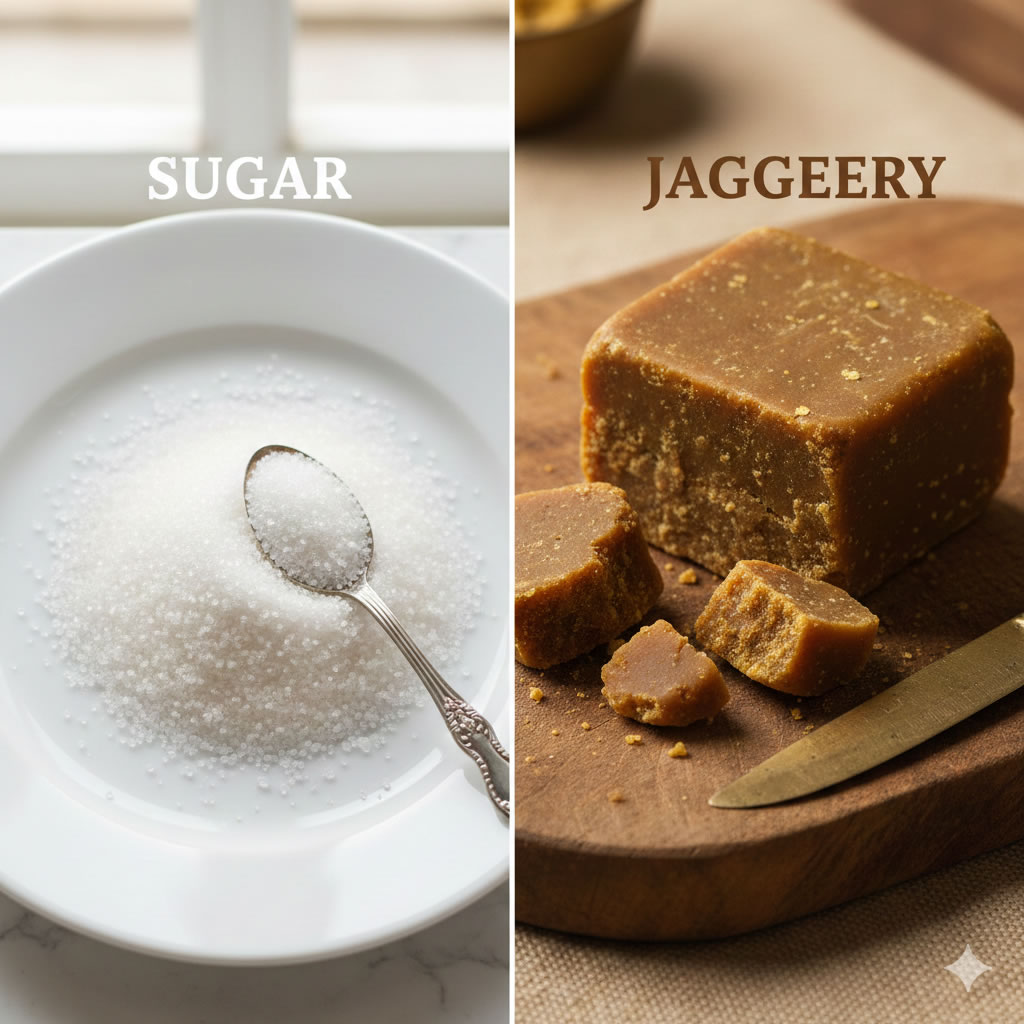
When we talk about “sugar” in its common form, we’re usually referring to sucrose—a disaccharide made up of one molecule of glucose and one molecule of fructose. This is the white, granulated sweetener that graces countless kitchen tables and is a staple in processed foods worldwide.
How White Sugar is Made: A Journey from Cane to Crystal
The production of white table sugar is a highly refined and industrialized process:
- Harvesting: Sugarcane or sugar beets are harvested.
- Crushing & Juicing: The cane is crushed, and the juice is extracted.
- Clarification: The juice is heated and treated with lime to remove impurities.
- Evaporation & Crystallization: Water is evaporated, leading to the formation of sugar crystals.
- Centrifugation: The crystals are separated from the molasses.
- Refining: This is the crucial step. The raw sugar crystals undergo further washing, filtration, and carbonation (often using bone char in some processes, though not all) to remove all traces of molasses, minerals, and color, resulting in the pristine white crystals we know.
The intensive refining process strips white sugar of virtually all its naturally occurring vitamins, minerals, and fiber. What remains is pure sucrose, offering quick energy but little to no nutritional value beyond calories.
Nutritional Profile of White Sugar
A single teaspoon (about 4 grams) of white sugar contains:
- Calories: ~16 kcal
- Carbohydrates: ~4g (all from sugar)
- Vitamins/Minerals: Negligible
The primary concern with white sugar lies in its rapid digestion and absorption. When consumed, it causes a quick spike in blood glucose levels, prompting a large release of insulin. Chronic overconsumption of refined sugar is linked to a plethora of health issues, which we’ll explore shortly.
The Traditional Sweetener: What is Jaggery?
Jaggery, known as ‘Gur’ in Hindi, ‘Gul’ in Marathi, or ‘Panela’ in some Latin American countries, is an unrefined natural sweetener. It’s typically made from concentrated sugarcane juice, though it can also be derived from date palm sap or coconut palm sap. It ranges in color from golden brown to dark brown and has a soft, fudgy texture.
How Jaggery is Made: A Simpler, More Natural Process
The production of jaggery is far less industrialized than that of white sugar, retaining more of the original plant’s nutrients:
- Extraction: Sugarcane juice (or palm sap) is extracted.
- Clarification (Natural): The juice is boiled in large, shallow pans. During this process, natural clarifying agents like vegetable extracts (e.g., lady’s finger mucilage) are often added to skim off impurities that rise to the surface.
- Concentration: The juice is continuously boiled and stirred until it thickens into a dense, syrupy consistency.
- Cooling & Shaping: The thick syrup is then poured into molds or left to cool and solidify into blocks, cakes, or granules.
Because jaggery is not put through extensive refining, it retains residual molasses, which is responsible for its characteristic color, flavor, and, significantly, its micronutrient content.
Nutritional Profile of Jaggery
While predominantly sucrose (around 70-85%), jaggery also contains a notable amount of glucose and fructose, along with minerals. A typical 10-gram serving (about 2 teaspoons) might contain:
- Calories: ~38 kcal
- Carbohydrates: ~9.5g (mostly sugars)
- Minerals:
- Iron: ~0.5–1 mg (significant for blood health)
- Magnesium: ~7–10 mg
- Potassium: ~30–40 mg
- Calcium: ~4–8 mg
- Phosphorus, Zinc, Copper: Trace amounts
The presence of these minerals is what often leads to claims of jaggery being a “healthier” alternative. However, it’s crucial to remember that these amounts, while present, are still relatively small compared to what you’d get from whole foods.
Internal Link Opportunity: To understand how to best incorporate healthy energy sources, check out our guide on Diet Plan for Muscle Gain.
Sugar vs Jaggery: A Head-to-Head Comparison
Let’s break down the key differences and similarities between these two sweeteners.
| Feature | White Sugar (Refined) | Jaggery (Unrefined) |
| Processing | Highly refined, chemically processed | Less refined, natural clarifying agents |
| Nutrients | Almost zero vitamins, minerals | Contains trace minerals (iron, magnesium, potassium, calcium) |
| GI Index | High (around 65) – rapid blood sugar spike | Moderate to High (varies, but often slightly lower than sugar, around 50-60) – still causes blood sugar rise |
| Calories | Pure carbohydrate calories | Pure carbohydrate calories |
| Taste | Purely sweet | Complex, caramel-like, sometimes smoky |
| Appearance | White, crystalline | Golden to dark brown, softer, less uniform |
| Digestion | Rapid | Slightly slower due to trace minerals and fiber (though minimal) |
| Cost | Generally cheaper per unit | Can be slightly more expensive, especially organic varieties |
| Uses | Baking, beverages, processed foods | Traditional sweets, curries, home remedies, beverages |
Health Implications: Is Jaggery Truly Healthier?
This is the million-dollar question. While jaggery does contain beneficial trace minerals that white sugar lacks, it’s crucial to put this into perspective.
The Good About Jaggery:
- Mineral Content: The presence of iron helps prevent anemia, magnesium supports muscle and nerve function, and potassium is vital for blood pressure regulation. While not a primary source, every little bit counts.
- Detoxification Claims: In Ayurvedic medicine, jaggery is often used to “cleanse” the liver and as a natural remedy for respiratory issues. While scientific evidence is limited, its traditional use suggests perceived benefits.
- Slower Energy Release (Slightly): Due to the presence of molasses and other non-sugar components, jaggery is often perceived to have a slightly slower impact on blood glucose compared to refined sugar. However, it is still largely sucrose and will raise blood sugar.
- Digestive Aid: In some traditions, a small piece of jaggery is consumed after meals to aid digestion, possibly due to its ability to activate digestive enzymes.
The Downsides (for both):
- High Calorie Density: Both sugar and jaggery are calorically dense. Overconsumption of either can lead to weight gain, which is a precursor to various metabolic disorders.
- Still a “Sugar”: Regardless of its mineral content, jaggery is primarily sucrose. It will still elevate blood sugar levels and, if consumed in excess, can contribute to insulin resistance, type 2 diabetes, and other health problems associated with high sugar intake.
- Dental Health: Both sweeteners contribute to tooth decay if proper oral hygiene is not maintained. The bacteria in your mouth don’t differentiate between refined and unrefined sugars.
- Glycemic Index (GI): While jaggery’s GI might be marginally lower than white sugar, it’s still considered a high-GI food. This means it can cause significant blood sugar spikes, which is a concern for diabetics or those managing blood sugar levels.
External Link Opportunity: For more on the Glycemic Index of various foods, you can refer to authoritative sources like the Glycemic Index Foundation.
The Impact on Specific Health Goals
Let’s explore how sugar vs jaggery might influence common health goals:
1. Weight Loss
Neither sugar nor jaggery is conducive to weight loss when consumed in excess. Both provide “empty calories” from carbohydrates without the satiety offered by fiber, protein, or healthy fats. If your goal is weight loss, reducing your overall intake of added sugars (both refined and unrefined) is paramount. The trace minerals in jaggery do not magically negate its caloric content.
2. Muscle Gain
For muscle gain, carbohydrates are essential for energy and recovery. Both sugar and jaggery can provide quick energy. However, for sustained energy and better nutrient delivery, complex carbohydrates are always preferred. If you do use a simple sugar post-workout for insulin spike, jaggery’s trace minerals might offer a slight edge, but its primary function is still carbohydrate delivery.
Internal Link Opportunity: Consider timing your workouts for optimal results. Read our analysis on Morning vs Evening Workout: Which is Better?.
3. Diabetes Management
For individuals with diabetes, the answer is clear: both white sugar and jaggery should be consumed with extreme caution and in very limited quantities. While jaggery might have a slightly lower GI, it is not a “diabetic-friendly” sweetener. Its high sugar content will still cause blood glucose levels to rise. Always consult with a healthcare professional or a registered dietitian for personalized dietary advice if you have diabetes.
4. Digestive Health
Jaggery is traditionally considered a digestive aid, particularly in India. Some believe its composition helps activate digestive enzymes. White sugar, conversely, has no known digestive benefits and can sometimes contribute to gut imbalances if consumed in large amounts. However, for significant digestive benefits, fiber-rich whole foods are far superior to either sweetener.
Beyond Sugar and Jaggery: Other Sweetener Alternatives
If you’re looking to reduce your intake of both sugar and jaggery, several other alternatives exist, each with its own pros and cons:
- Honey: A natural sweetener with antioxidants and some trace minerals. Still high in sugar.
- Maple Syrup: Contains some minerals and antioxidants. Also high in sugar.
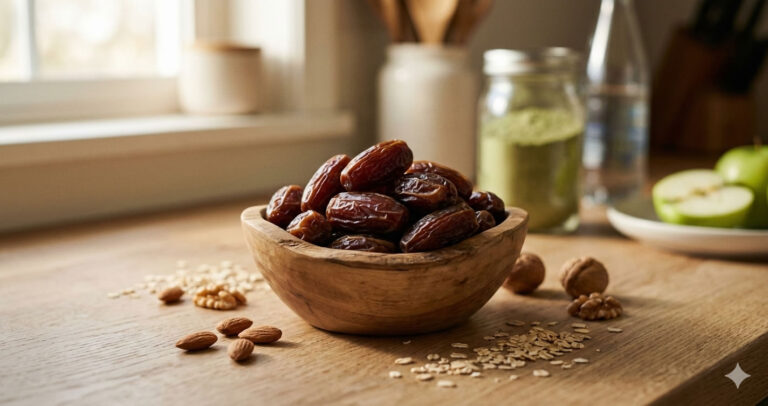
- Dates & Date Sugar: Whole food options, rich in fiber, vitamins, and minerals.
- Stevia: A natural, calorie-free sweetener derived from the stevia plant.
- Erythritol/Xylitol: Sugar alcohols that are low in calories and have a minimal impact on blood sugar. Can cause digestive issues in some.
- Monk Fruit: Another natural, calorie-free sweetener.
When choosing alternatives, consider their processing, nutritional content, and impact on blood sugar.
Practical Recommendations for Your Kitchen
So, given the sugar vs jaggery debate, how should you approach sweeteners in your daily cooking and diet?
- Reduce Overall Sugar Intake: This is the most important step. Whether it’s white sugar or jaggery, aim to reduce your overall consumption of added sweeteners. Train your palate to appreciate less sweet flavors.
- Choose Jaggery for Nutritional Edge: If you must use a sweetener, and you are choosing between white sugar and jaggery, opt for jaggery due to its slightly higher micronutrient content and less refined nature.
- Consider the Source: Look for organic, unadulterated jaggery. Some commercial jaggery might still have additives or undergo some processing that diminishes its benefits.
- Portion Control is Key: Even with jaggery, moderation is non-negotiable. A small piece of jaggery after a meal, or a teaspoon in your tea, is different from using large quantities in desserts.
- Focus on Whole Foods: Prioritize naturally sweet whole foods like fruits (berries, apples, bananas) which come with fiber, vitamins, and minerals, offering true nutritional benefits without the drawbacks of added sugars.
- Read Labels: Be aware of “hidden” sugars in processed foods. Jaggery is often used in natural or organic products, but it’s still an added sugar.
Conclusion: Making Smarter Sweet Choices
The sugar vs jaggery debate isn’t a simple black-and-white answer. While jaggery undeniably offers a marginal nutritional advantage due to its less refined nature and trace mineral content, it is still primarily a source of sugar. Both must be consumed in moderation.
For true health and well-being, the ultimate goal should be to reduce your overall reliance on added sweeteners, whether white sugar, jaggery, or any other alternative. When you do choose to sweeten, jaggery emerges as the slightly better option because of its minimal nutritional contribution, but it is by no means a “health food.”
Empower yourself by understanding what you consume, making informed choices, and prioritizing a diet rich in whole, unprocessed foods. Your body will thank you for it.
About The Author